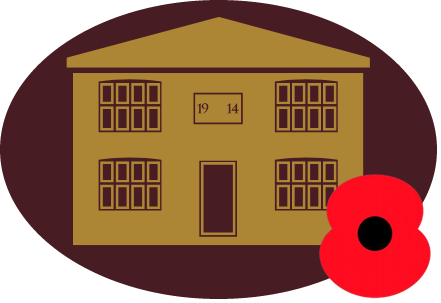
Wolverton’s Drill Hall — later known as Millmead Hall — is a rare surviving example of a 1914 Territorial Force drill hall. Its history spans military mobilisation, community sport, youth work, and local governance. This annotated timeline captures its evolution from 1877 to the present.
Architectural Summary
- Style: Edwardian military functionalism
- Materials: Red brick, slate roof
- Key features:
- Battalion crest above entrance
- Corbelled entrance canopy
- Large-span internal hall
- Ancillary residence on site
Timeline
Formation of the 1st Buckingham Rifle Volunteers
Early drills took place inside the LNWR Railway Works paint shop, reflecting Wolverton’s identity as a railway town.
Wolverton workers formed a volunteer rifle corps, part of the national movement to create local defence forces.
Land Purchased for a Purpose‑Built Drill Hall
- Land acquired from the Radcliffe Trust and St Bartholomew’s Hospital estate.
- Marks Wolverton’s transition from improvised drill spaces to a formal Territorial Force presence.
Architectural note:
The site chosen sits on Haversham Road, then a semi‑rural edge of Wolverton, allowing space for parades and training.
Drill Hall Officially Opened
- Opened by General Bethune, Director General of the Territorial Force.
- Designed by John Chadwick of Bletchley, a known architect for volunteer and TA buildings.
- Built by Messrs Archer for £3,132.
Military significance:
Home to F & G Companies, Buckinghamshire Battalion, Oxfordshire & Buckinghamshire Light Infantry.
The building’s façade includes the Bucks Battalion crest, still visible today.
First World War Mobilisation
Wolverton’s railway works also played a major wartime role, making the hall part of a wider local mobilisation network.
The Drill Hall served as a mustering and training point for local men.
Likely used for equipment storage, drill, and administrative coordination.
Second World War Use
Used for training, local defence organisation, and wartime community coordination.
Architectural note:
The building’s large-span hall and robust brickwork reflect pre‑WWI military design standards, enabling heavy use during both wars.
Sold by the Ministry of Defence
- After 56 years of military service, the building was sold to Buckinghamshire County Council.
- Transitioned from military to civilian community use.
Associated building:
A house on the site, matching the hall’s brickwork, likely served as a sergeant instructor’s residence or caretaker’s home.
North Bucks Youth Sports Hall
- Rebranded as the North Bucks Youth Sports Hall.
- Used for:
- Archery
- Shooting
- Youth clubs
- Indoor sports
- Community events
Cultural note:
Many Wolverton residents still refer to it as “the Drill Hall” during this period.
Renamed Millmead Hall
Despite the new name, the building’s military heritage remained visible.
The hall began being referred to as Millmead Hall, aligning with local naming conventions and community identity.
Millmead Hall Ltd Incorporated
Indicates a formalised management structure for community use.
A company limited by guarantee was formed to operate the hall.
Community Asset Transfer
Millmead Hall was transferred from Milton Keynes City Council to Wolverton & Greenleys Town Council as part of city council rationalisation amid cuts to budgets.
New Primary Managment Tenant
Wolverton & Greenleys Town Council leased Millmead Hall to Milton Keynes Sea Cadets & Royal Marines Cadets.
If you would like to add to the historical timeline of Wolverton Drill Hall/Millmead Hall or address an inaccuracy, please use the for below to get in touch.